
Gassing shaking
With standard time-over-pressure gassing, a limitation often occurs: the gas does not fully mix with the product, causing absorption to stop before the desired ratio is reached. In practice, this requires adjustments in formulation or packaging, or additional steps further down the process.
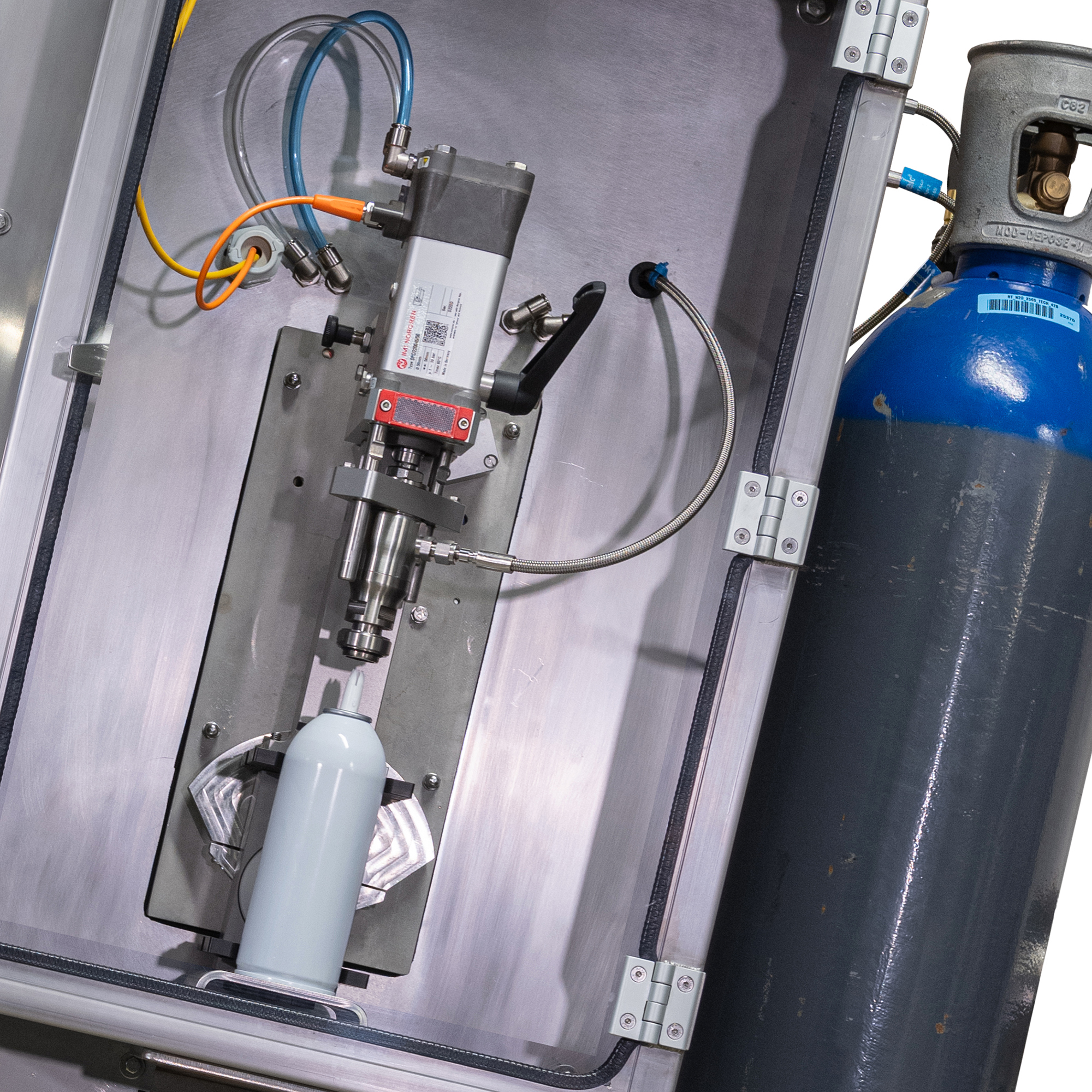
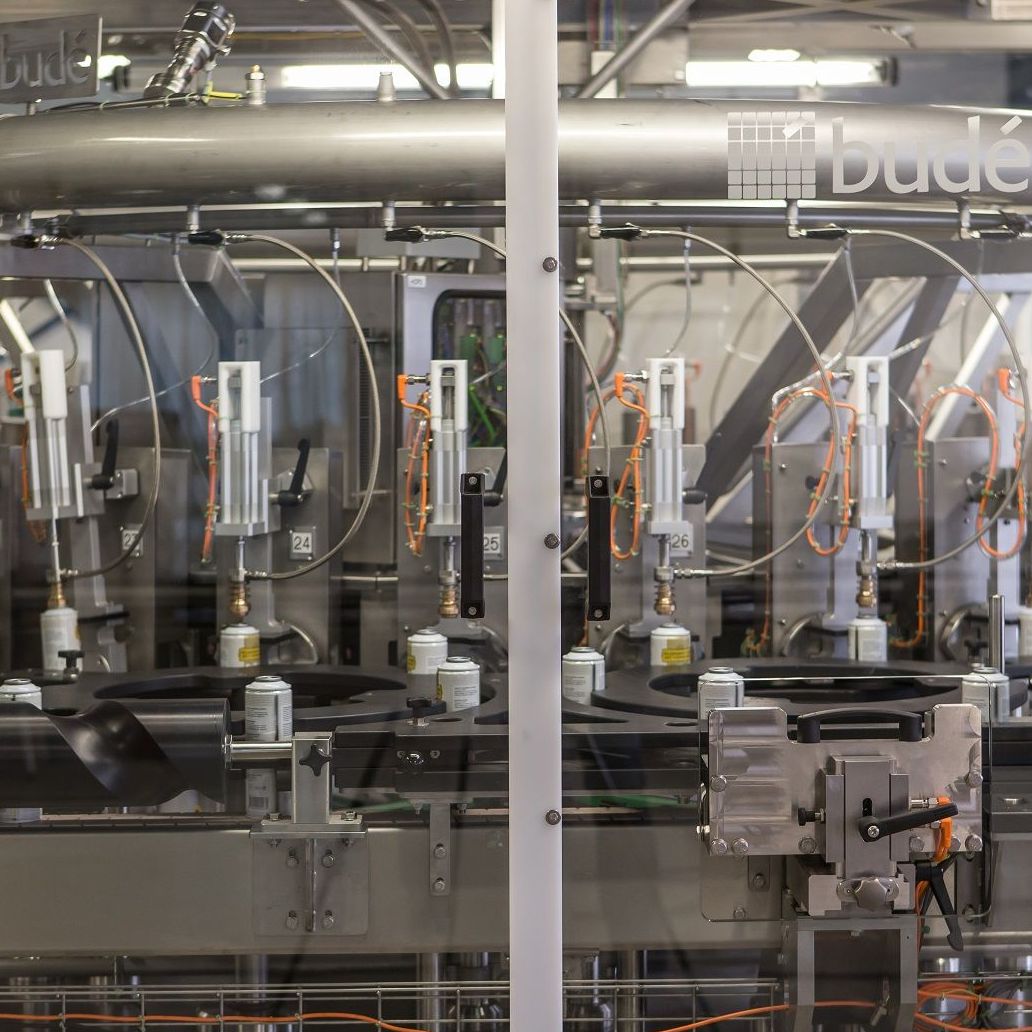
Gasshaking approaches this differently. During the addition of propellant, the aerosol can is kept continuously in motion, with rotations up to approximately 550 rpm. This movement ensures that gas and product mix directly during gassing. As a result, more gas can be absorbed into the same content, without slowing down or complicating the process.
This technique is often applied with gases such as CO2 and N2O. It originates from the whipped cream industry, where the mixing of gas and product directly affects the performance of the final product. Today, the same approach is also used in other applications, such as food products, personal care, and industrial products.
scroll
Effect on product and proces
Mixing during gassing creates a different balance between product and gas. Compared to conventional time-over-pressure techniques, a larger portion of the content can consist of product while maintaining functionality. In practice, this can result in a filling level of approximately 80–90% product.
This directly impacts packaging and logistics, as well as how a product is formulated. In some cases, the use of LPG becomes unnecessary, or an alternative can be found for BOV systems. The most suitable direction depends on the product and the desired properties of the final result.
The effectiveness mainly depends on the interaction between product and gas. For products with lower viscosity, such as creams or oils, this interaction is often easier to control. This makes the technique suitable for applications where mixing behavior determines performance.
download whitepaper on gas shakingRotary gasshaker
The technology has been developed in an environment where cleanability and continuity are key. Based on applications in the food industry, systems have been designed to meet high production standards, including cleaning requirements and controlled process conditions.
Depending on the application, the installation can be expanded with features such as gas pressure control, automatic cleaning, or fill level detection. The systems are typically rotary in design and built for capacities of approximately 100 to 340 cans per minute.
How the gasshaker is implemented and configured is determined per situation, depending on the product, the desired output, and how the rest of the line is set up.
Could gas shaking work for your product?
Download whitepaper
Download the Aerosol whitepaper
Linear gasshaker
Based on our proven gasshaking technology we designed the linear gasshaker for the regular aerosol market. The linear gasshaker is available in several versions that differ in size, ranging from 4 to 12 shake units. The speed of these linear systems varies between 10 – 60 cpm, depending on required the shake-times.
Contact us to discuss what makes sense for your situation.
download product sheet linear gasshaker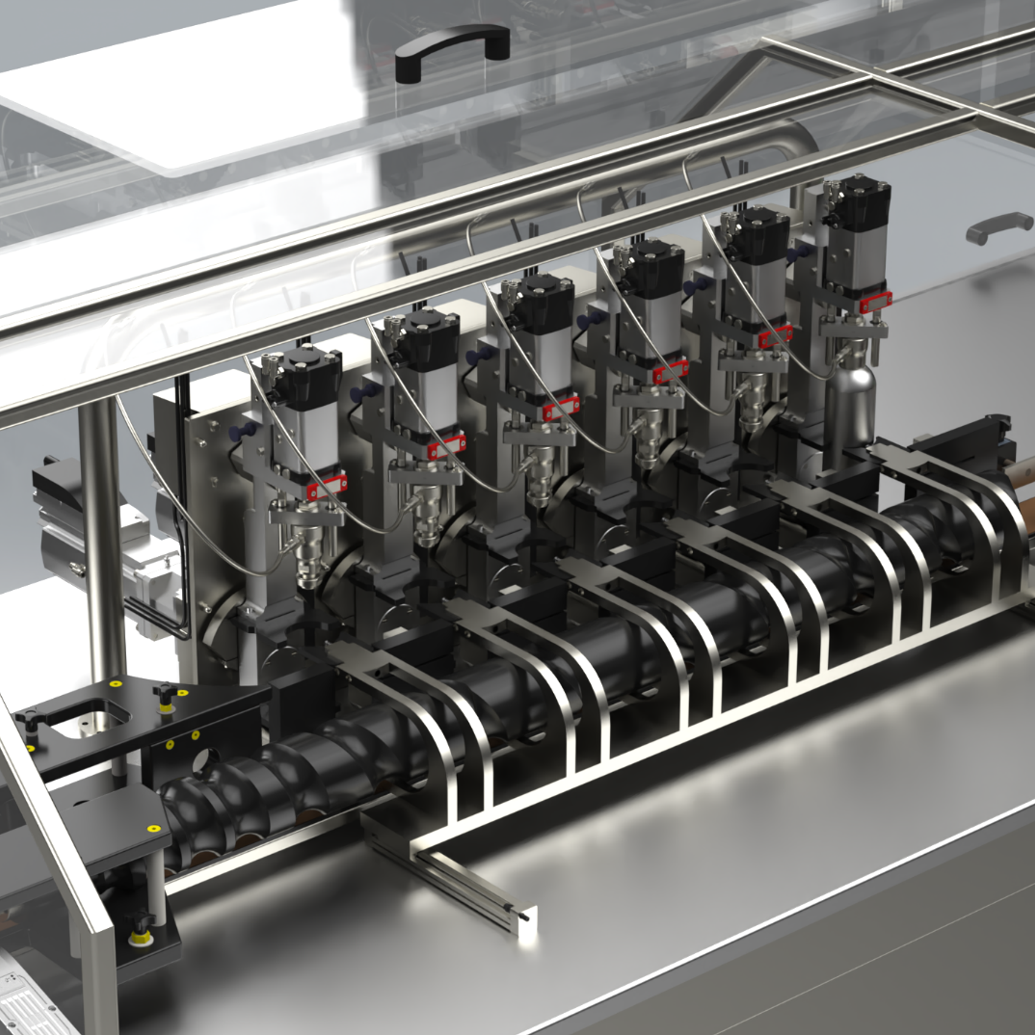
Semi-automatic gasshaker
The semi-automatic shaker unit is designed to offer the option to test concepts and configurations and to confirm if benefits can be achieved with the shaking technology. The unit comes with a simple touchscreen user interface. A crimping unit can be installed separately but could also be integrated next to the shaking unit. Different types of gas can be used while a mass-flow unit adds to the parameters that can be influenced and monitored. As such the unit is the ideal starting point to explore the opportunities that can be achieved with the shaking technology
download product sheet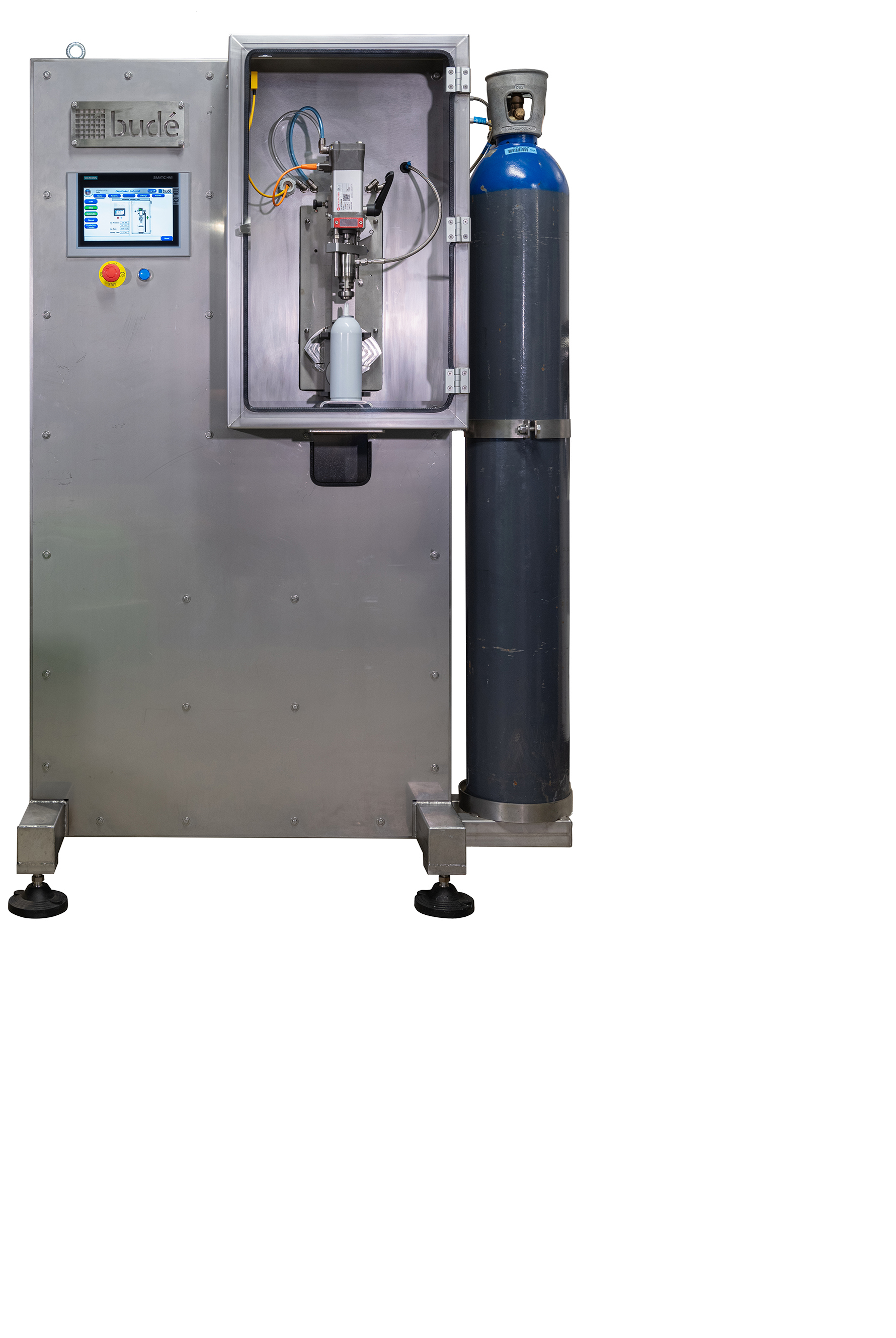
"Some people are not aware of the technology"
Based on the discussions the company has had with aerosol manufacturers and fillers, there seem to be several things happening. Some people are not aware of the technology, as the way things are done is the way they have been done for many years. The fact that some conventional aerosols contain as low as 50% product and as high as 50% gas, is what companies understand and, as such, accept. This is especially the case for vapour gas products where this is needed to allow sufficient space for the propellant to expel all the product.
Contact